

By Dr Jim Scotson
We have talked about industrial robots for decades. What is changing is the intelligence that can sit around them. AI is moving beyond analysing production data or writing a report on a screen: it is beginning to help machines interpret what is happening around them and respond in the physical world. That shift is what people increasingly mean when they talk about Physical AI.
Physical AI could change what manufacturing systems can do, particularly where work is variable, difficult to reach or exposed to risk. The opportunity is arriving alongside better digital twins and virtual environments, more connected plant data, compact edge-computing hardware and growing data confidence among operators and engineers. Those foundations make it more practical to develop and test intelligent systems in an industrial setting. The question is how we use them to solve real problems and earn confidence on the factory floor.
The robot is the body; the AI is part of the perception and decision-making.
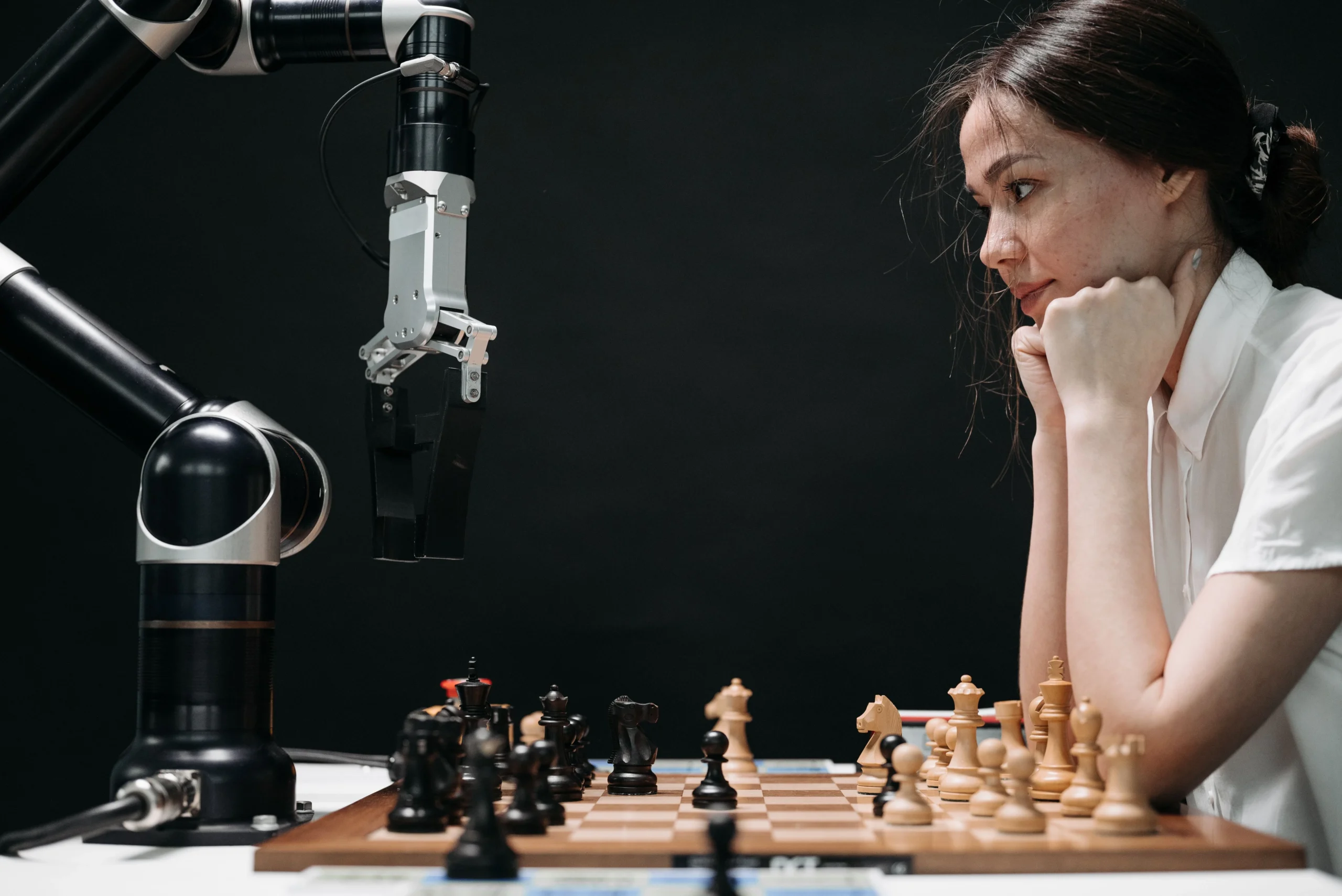
Perhaps the first thing to ask is what we mean by Physical AI. A robot is a machine: it may be a fixed arm, a mobile platform or automated handling equipment. Physical AI describes the intelligence that allows a system to sense its surroundings, use information about the process, make or support decisions, and act in the physical world. The robot is the body; the AI is part of the perception and decision-making. They can work together, but they are not the same thing. A robot following a fixed programme is still useful automation, even if it is not Physical AI.
That distinction matters because much of the value of AI in manufacturing has so far been on a computer: finding patterns in quality data, forecasting maintenance or helping an engineer compare options. Those tools are valuable when the outcome is better information for a person. Physical AI becomes useful when the system also needs to respond to what is happening on the plant floor, where timing, location and changing conditions matter. It might adjust a task, route a mobile robot around an obstruction, or flag a change for an operator to review. The system is part of a feedback loop between the process, its data and an action.
Dull, Dirty, Dangerous, Difficult and Dear
A useful way to identify work for robotics is the five Ds: dull, dirty, dangerous, difficult and dear. Versions vary, but the underlying question is practical: is this a task that is repetitive, unpleasant, hazardous, hard to carry out or costly to staff? In a glass plant, that might mean routine inspection in a hot or dusty area, repetitive checks, or gathering information where access is awkward.
These are tasks to examine, not whole jobs to remove. A robot may take on the exposure or repetition while an operator uses the information it gathers and focuses on decisions that need experience. Physical AI can extend this idea to work where conditions vary and a fixed programme is not enough: the system needs to perceive what has changed and respond within clear limits.
The Rise of The Machines
Robotics and industrial automation are not new. What feels different now is the convergence of capable AI models, better sensors, more connected operational data, simulation and computing that can run close to the equipment. Together, these make it possible to build systems that respond to more than a single fixed input. A maintenance model might once have highlighted a potential fault for an engineer to investigate; a connected inspection system could now help gather the right evidence at the equipment and bring it into that decision. The important change is a broader range of useful tasks, not a sudden replacement of existing robotics.
Industrial settings do have specific requirements. A system may need to work around heat, dust, vibration, noise, restricted access and a process that cannot simply be paused while a model is adjusted. Those conditions shape the design and the evidence we need; they do not make progress impossible. Digital models, historical data, connected sensors and test facilities let teams explore many questions before they affect production. As the foundations improve, manufacturers can start with a defined task, keep a person in the loop where needed and build evidence in stages.
Building confidence through practical evidence
A manufacturer does not have to choose between trusting a bold promise and rejecting a new technology. The useful middle ground is a controlled, well-scoped trial. In glass and other foundation industries, production is continuous (or semi-continuous) and a furnace cannot simply be switched off to make experimentation easier. Testbeds and Research and Technology Centres (RTCs) such as Glass Futures can create room to learn: start with a defined use case, test it against realistic conditions, and build the evidence needed before considering a live deployment.
That evidence matters because industrial knowledge is built through experience. It is reasonable for an engineer to ask whether a system can do the job as well as someone who knows the process inside out. And when the technology is moving quickly, it is reasonable to wonder whether to wait for the next model. A practical response is to begin with a valuable, bounded task and agree what success looks like. The aim is not to buy the latest label; it is to find out whether the system makes the work safer, more consistent or more productive.
Operators and engineers should be part of that work from the start. Training can show how a system senses a process, what it can and cannot decide, and when it should hand control back to a person. That is useful for both the people who will work alongside the system and the people designing it. Physical AI is more likely to change tasks and create new responsibilities than remove the need for industrial expertise. The technology has to fit the knowledge already in the plant.
Digital twins and virtual environments open-up the possibilities
A digital twin gives us a way to connect a model of a process with information from the real one. At Glass Futures, for example, a digital twin furnace and virtual environments can help teams explore operating conditions, train AI systems and rehearse how a robot or operator might respond. We can examine scenarios that would be difficult, costly or unsafe to reproduce on a live production line, then use what we learn to shape a physical trial. As the connection between plant data, simulation and equipment improves, it becomes easier to move from an idea to a testable question. This can reduce uncertainty and help focus investment on the use cases with the clearest value.
Taking the next step in an industrial testbed
Simulation is a strong starting point, and physical testing shows whether the system works with real equipment, people and operating conditions. At Glass Futures, we can work with manufacturers, academics and technology developers to choose a useful workflow, define how it interacts with the plant, and identify the sensors, data links and safety measures it needs. A testbed can provide a controlled setting while still exposing the system to practical conditions such as heat, dust, vibration, restricted access or changing production demands. We can then measure outcomes that matter to a manufacturer: safety, repeatability, accuracy, uptime and the quality of information reaching an operator. This is how simulation can lead to evidence that is relevant to deployment.
Physical AI does not make conventional robots redundant. If a robotic arm needs to move the same bottle between two known points, a standard programmed system may be exactly right. The case for adding intelligence grows when the task changes: perhaps the line speed varies, the bottle arrives in a different position, or a camera and thermal sensor can give the system context that a fixed programme does not have. Sometimes the best route is to make an existing robot more aware with better sensing and a reliable link to plant data. The right level of intelligence depends on the task.
Opportunities for glass and the foundation industries
Glass and the foundation industries are a compelling place to develop Physical AI. Their processes combine high temperatures, continuous production, complex materials and demanding quality and safety requirements. Those conditions make the work important, and they give us a chance to develop systems that can cope with the realities of manufacturing. The lessons from a well-designed industrial trial could also inform other sectors with similar needs.
AI-enabled systems could support inspection, maintenance planning, environmental monitoring, material handling and process optimisation. A mobile robot might gather information in a hot or difficult-to-access area, while an intelligent camera system could spot a developing change and bring it to an operator’s attention. These are not just ways to reduce exposure to hazardous work; they can also create a more regular flow of useful information about the process. The foundation industries have an opportunity to shape how these systems are developed, tested and used across manufacturing.
Physical AI can support human expertise rather than replace it
In an age of skill shortages and an ageing workforce across many industries, Physical AI can support human expertise rather than replace it. The future is unlikely to be fully autonomous factories with no human involvement. Most likely is a model where operators, engineers and AI-enabled systems work alongside each other. Intelligent systems might handle repetitive, hazardous or data-intensive tasks. But skilled workers will remain responsible for decisions, and oversight. Developing these human-machine relationships in a realistic industrial test environment could prove just as important as perfecting the technology itself.
Looking ahead
Physical AI is a developing part of industrial technology, and its promise is practical: safer work, more reliable operations, better use of data and new ways to improve productivity and sustainability. The conditions for progress are stronger than they were a few years ago. Digital twins and virtual environments let us test ideas earlier; connected data makes it easier to give systems context; compact edge hardware can bring computing closer to the equipment; and operators are increasingly used to working with data as part of the job. Industrial testbeds and collaboration can bring those pieces together and build confidence through evidence. For example, a compact platform such as NVIDIA Jetson Orin Nano can put AI computing close to a sensor or robot.
At Glass Futures, we can help industry turn that potential into practical trials. By connecting digital models, plant data, equipment and people, we can test whether an intelligent system is useful in the conditions that matter. Physical AI does not have to begin with a fully autonomous factory. It can begin with one well-chosen task, a clear measure of value and a route to learn safely. That is how a promising idea becomes a trusted industrial tool.
Photo by Pavel Danilyuk