

By Rob Ireson, Head of Innovation
With France set to have the most hybrid furnaces in Europe, the country is taking steps to decarbonise and strengthen the energy independence of its glass industry.
As Europe’s second largest glass producing country, the Federation of Glass Industries (FIV) said the commissioning of three hybrid furnaces signalled the industry’s ambition to invest, decarbonise and contribute to France’s economic resilience.
Recognising that industrial sovereignty isn’t just about the ability to produce, Federation President Jacques Bordat said sovereignty “…is also based on the ability to maintain efficient, innovative sectors that are rooted in the territories.”
So, we’re delighted to see two Glass Futures members, O-I Glass and Verallia, alongside Verescence, bringing new innovative hybrid furnaces online to replace gas with low-carbon electricity.
Given the high cost of alternative low-carbon fuels, the limited availability of biomethane and the lack of hydrogen supply and infrastructure, electrification is widely seen by industry as the most viable route to decarbonise and lower fuel costs across Europe.
And with nuclear power a defining part of France’s energy system, generating around 65-70 per cent of the country’s electricity, France’s energy-intensive sectors like glass and the foundation industries have a major strategic advantage. They can benefit from a stable supply of home-grown, low-carbon electricity and predictable, lower pricing compared to gas dependent countries like the UK.
With hybrid furnaces able to reduce carbon emissions by up to 64 per cent, innovation within the glass sector is decarbonising, securing thousands of job, powering economies, retaining specialist industrial skills and strengthening sovereignty by producing closer to consumption sites while enhancing competitiveness.
But what does this mean for the UK and our sovereignty?
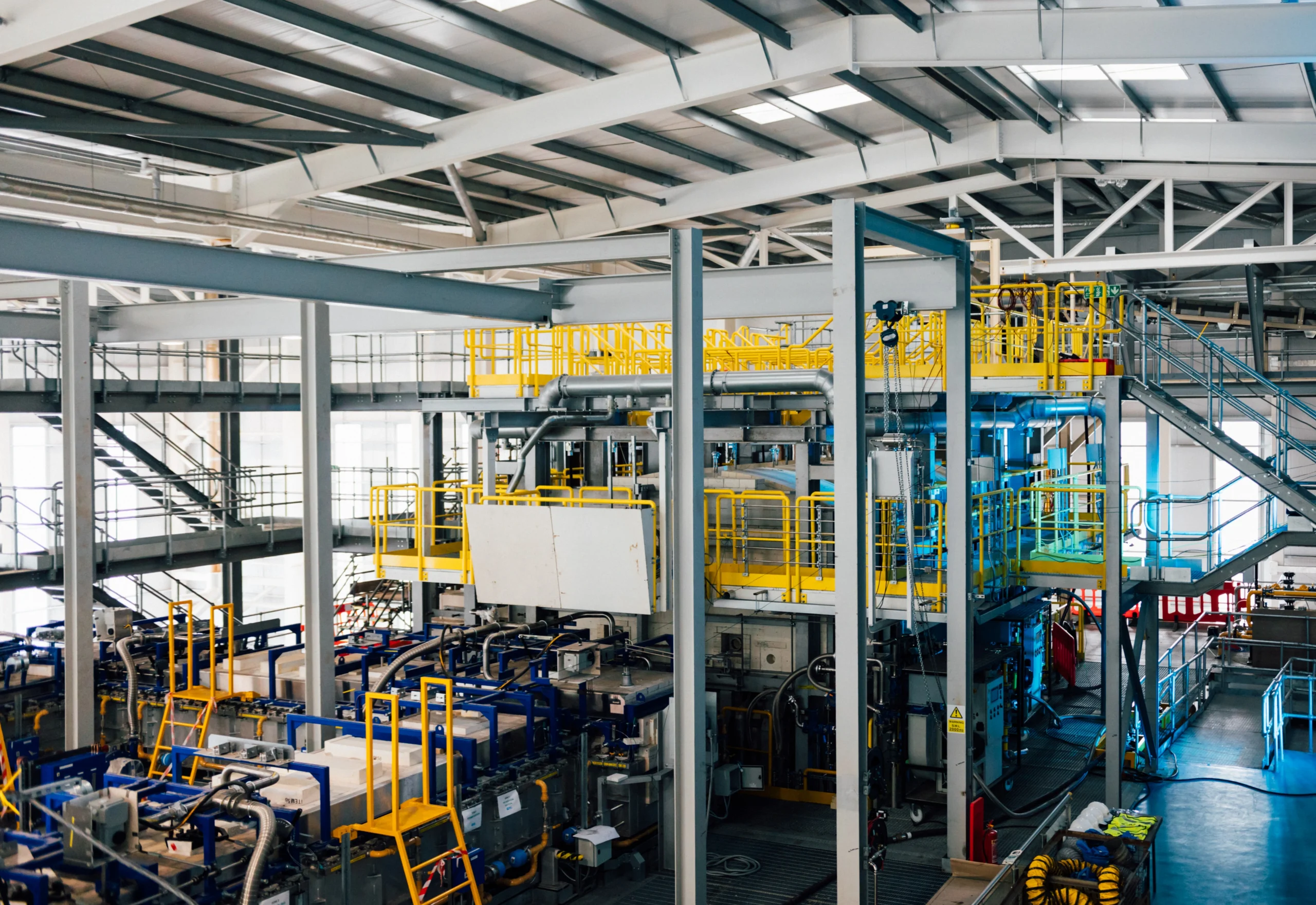
At Glass Futures, the UK has the world’s first multi-fuel hybrid pilot furnace with an AI-driven digital twin. We’re able to test sustainable fuels and new technologies to accelerate low-carbon innovation across glass and the foundation industries.
Our work on hydrogen and biofuel combustion, digital melting, and electrification allows industry to experiment without risk and provides evidence-based results in support of fuel-switching and technology adoption.
But unlike France, our glass sector and other foundation industries are faced with higher fuel costs and an electricity supply that is governed by demand on our national grid. While we store some sustainable electricity generated from wind and solar in the UK, we’re not able to store anywhere near the amount we need.
While we don’t yet have the nuclear capability to support electrification like France, we can use innovation to reduce our reliance on overseas gas and keep the UK glass industry competitive. For example, by enabling manufacturers to access lucrative energy flexibility markets through providing demand-side response services by reducing/increasing electricity usage to help balance demand on local energy grids.
Through our RaD-Electric project with partners Guardian Glass and Encirc, we secured £6m of funding from the UK government’s Department for Energy Security and Net Zero (DESNZ), under the Industrial Fuel Switching programme, to look at the potential of electric boosting in furnaces.
Pilot and industrial trials demonstrated that hybrid furnaces are capable of dramatically cutting emissions, improving efficiencies and reducing fossil fuel reliance.
Structural challenges fuelling innovation
As aforementioned, one of the biggest structural challenges in the UK energy system is the ability to store electricity and meet needs when grid demand fluctuates. Through conducting pilot-scale trials, we’ve been able to develop new control systems for rapid energy switching and CFD models to simulate heat transfer and material flow under electric-boosting.
This has allowed us to assess the potential technical and economic viability of ‘demand side response’ services that hybrid furnaces could offer to help balance local electricity needs with unaffected product quality. Using our AI-enabled furnace control system we were able to not only prepare the furnace in advance but also ensure that it remained in a stable state during and after any energy transitions.
For example, this might mean heating the glass within the furnace to a slightly higher temperature when grid demand is low and electricity is cheap, then turning down the electric boost (whilst increasing gas power) when grid demand is high. We found this could have significant economic benefits for industry helping to offset the high cost of gas at other times.
Glass Futures are working with manufacturers, government bodies, energy providers and electricity network operators to develop the most economically attractive opportunities for the UK glass sector, to maximise benefits to both manufacturers and energy providers.
Innovation is always situation-dependent, coming from a response to a particular challenge or landscape so will vary from country to country. Yet, what is clear is that whether it’s the glass industry in France or the UK, innovation in the form of ideas or technologies underpins industrial sovereignty. From economics and jobs to the environment and energy security, innovation plays a pivotal role.