

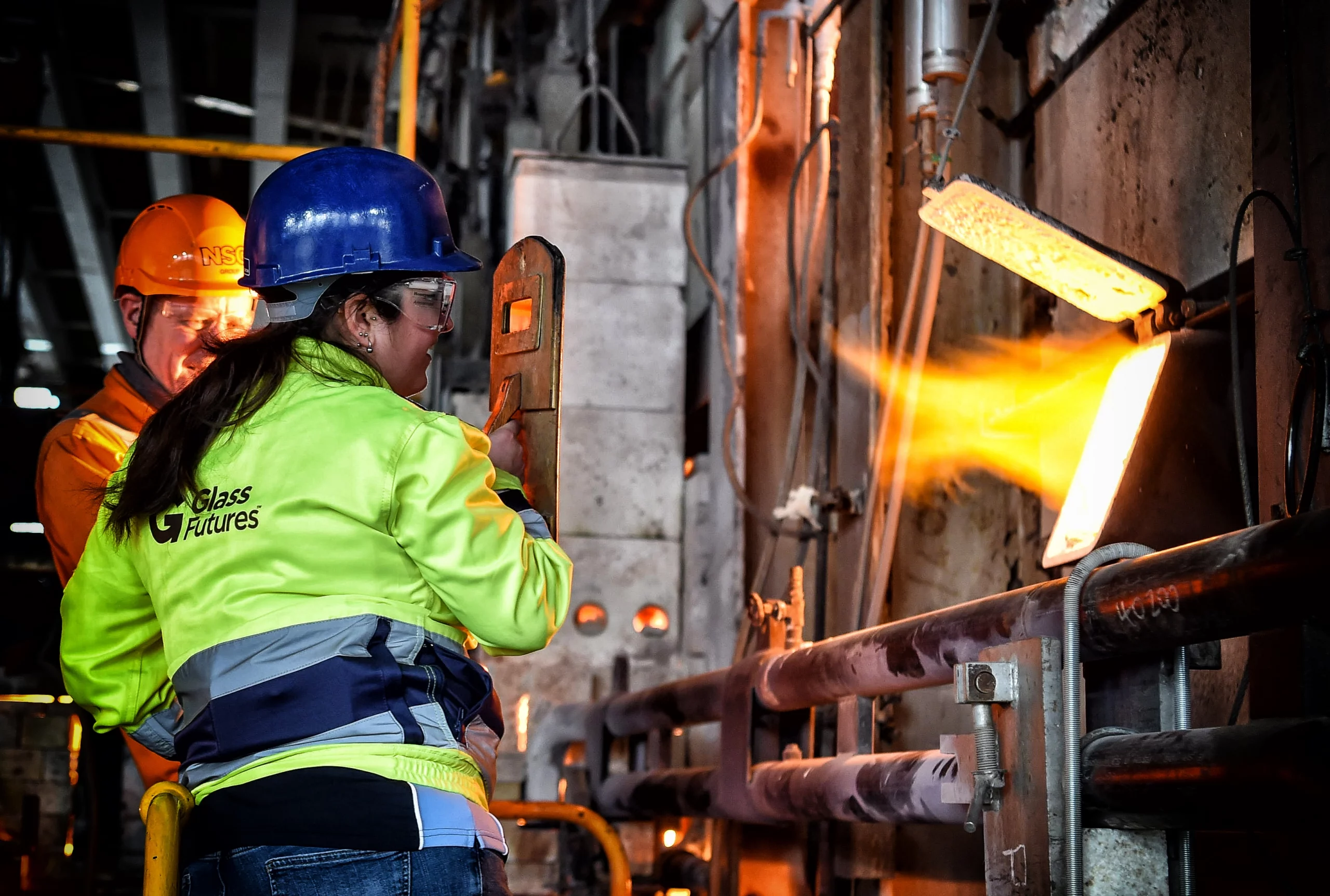
International Women in Engineering Day
Different paths, same drive
If you ask the women at Glass Futures how they got into engineering, you won’t get a neat answer.
There’s no single route. No obvious pattern.
Some started in science. Some didn’t. Some planned it. Most didn’t.
And that’s probably the most honest reflection of what women in engineering actually look like today.
One person studied Public Relations and ended up building a career around science.
“I realised I wanted to use the power of storytelling to make something meaningful and impactful.”
Another was hooked much earlier, trying to understand what limits the world around us.
“Materials were always at the heart of the limitations, whether it was melting point, pressure, or how we shape them.”
And for some, it was about course correcting along the way.
“I tried to be an academic, but it’s not for me… which is how I ended up in industrial research.”
No two journeys are the same. But they all have the same thread running through them: curiosity, and a willingness to follow it.
It’s not just about the technical side
There’s still this idea that engineering is all numbers and equipment.
But when you actually talk to people doing the job, that’s only part of it.
“Success often depends on helping people understand the problem, build confidence, and work together effectively.”
Even in highly technical roles, you’re constantly explaining, translating, and reassuring. Making something new feel less unfamiliar.
And in some roles, the whole job is making complex ideas make sense.
“Striking the right balance between making something engaging and keeping it fully accurate is a real challenge.”
It’s easy to overlook that, but without it, nothing moves forward.
Others found their way into science and industry through chemistry.
It wasn’t an easy environment to step into.
In some areas, there weren’t even women’s toilets. She remembers getting changed in car parks before shifts, just to be able to do her job.
Later, she reflected honestly on just how tough it could be, including being shouted at for “taking a man’s job”, having ideas overlooked, or opportunities passed to less experienced men.
And yet, she stayed. Learned. Asked questions.
“The knowledge is in people’s heads,” she was told, so she listened.
Confidence doesn’t come first
This came up again and again.
That feeling of not quite ticking the expected boxes. Not having the “right” background. Wondering if you belong there.
“I’ve often felt insecure about not having the ‘traditional’ scientific credentials… but that’s actually one of my greatest strengths.”
And then, over time, realising that experience matters more than perfection.
“I wish I had realised sooner that confidence doesn’t come before experience, it comes from experience.”
It’s not about waiting until you feel ready. It’s about doing it anyway and figuring it out as you go.
Or, as one person put it more simply:
“Done is better than perfect.”
The industries people overlook
Glass, like a lot of foundation industries, doesn’t always get much attention.
People assume it’s traditional, slow-moving, already “figured out”.
But that couldn’t be further from the truth.
“We’re at a real turning point right now… it feels like now or never.”
There’s huge change happening around sustainability, alternative fuels, circular materials, and new ways of manufacturing.
And the thing that stands out most is the sense of scale. This isn’t theoretical.
“The opportunity to reimagine how we produce these materials in a more sustainable and innovative way… is incredibly motivating.”
Looking out for each other
One of the more honest parts of these conversations is that the environment isn’t always easy.
Engineering is still, in many places, male-dominated. That comes with its own challenges.
“There will be people… who don’t believe that you have what it takes.”
But instead of accepting that, there’s a real effort to change it from within.
“I try as much as possible to shine a spotlight and lift up other women, even when they’re not in the room.”
It’s not always big gestures. Often it’s small things like backing someone up, encouraging them to speak, and making sure they’re heard.
That’s how the culture shifts.
Where this leaves us
There’s no big neat conclusion to all of this.
Just a clearer picture of what engineering actually looks like when you step inside it.
It’s messy. It’s varied. Sometimes uncertain.
But it’s also full of people figuring things out, trying new approaches, and quietly reshaping industries that affect all of us.
“You do not need to know everything on day one… your perspective and contribution are valuable.”
That’s probably the most important thing to take away.
Not just for International Women in Engineering Day, but for anyone wondering if they fit into this space at all.