

Background and Challenge
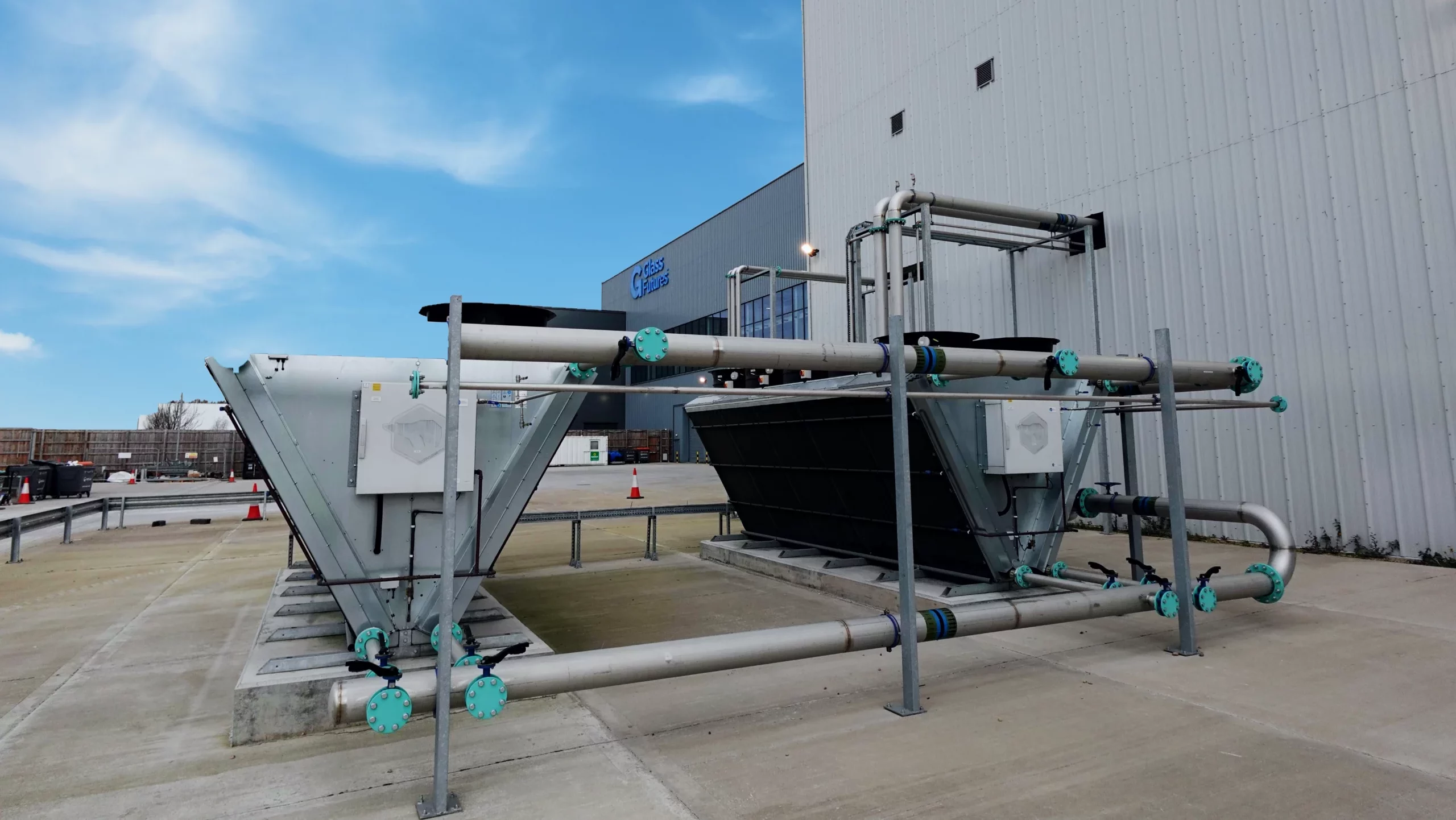
The critical cooling water system at Glass Futures (GF) is vital for ensuring it’s 30-tonne-per-day glass furnace maintains thermal stability, ultimately supporting pilot-scale glass manufacturing research and innovation activities. Located at GF’s Centre of Excellence in St Helens, the system must operate reliably to protect assets and ensure safe operation of the furnace, forming equipment and ancillary processes.
Traditional monitoring approaches rely on fixed alarm thresholds and reactive maintenance, which can struggle to detect early-stage degradation such as fouling, pump inefficiency or valve performance drift. Unplanned downtime or sub-optimal cooling performance presents risks to equipment integrity, experimental outcomes and operational efficiency.
Through an Innovate UK Business Growth project, anomalyseTM worked with GF to implement an advanced monitoring solution capable of detecting subtle, multivariate deviations in system behaviour while integrating seamlessly with the existing Siemens automation infrastructure.
Proposed Solution
The anomalyseTM anomaly detection platform has been deployed to provide continuous, model-based monitoring of the critical cooling water system on the GF 30-tonne glass furnace. Using machine
learning-driven behavioural models, anomalyseTM learns what “normal” operation looks like across multiple operating modes and identifies any emerging anomalies before they trigger alarms or cause failures.
The solution is implemented in a non-intrusive manner by integrating with the existing Siemens SIMATIC PCS Neo control system via the Siemens Process Historian, ensuring no impact on real-time control or safety systems.
Glass Futures’ water cooling system
Solution Architecture
Data Sources
Process data is sourced from Siemens SIMATIC PCS Neo, including key cooling water variables such as:
- Flow rates
- Supply and return temperatures
- Differential pressures
- Pump status and power consumption
- Valve positions
These signals are already collected and stored in the Siemens Process Historian.
Data Integration
The Siemens data historian connects securely to the anomalyseTM platform using the secure API. Historical data is used initially to train the models, while live data streams are ingested continuously for real-time monitoring. No direct connection to the control layer is required.
Analytics and Anomaly Detection
The anomalyseTM platform builds multivariate models that capture normal system behaviour across different loads, seasons, and operating regimes. Rather than relying on static thresholds, the platform detects deviations in relationships between variables, enabling early identification of issues such as:
- Gradual pump degradation
- Blockages or fouling in cooling circuits
- Heat exchanger efficiency loss
- Control valve or sensor drift
- Abnormal operating patterns during transitions
Visualisation and Alerts
Detected anomalies are presented through the anomalyseTM dashboard which features:
- Anomaly scores indicating the magnitude of abnormality
- Score contributions from each model variable, explaining what exactly has changed
- User calibrated alerts indicating events of interest
Alerts can be configured to notify operations and maintenance teams, supporting timely investigation and corrective action.
Business and Operational Benefits
- Early Fault Detection: Identify developing issues before they result in alarms, trips, or equipment damage.
- Improved Reliability: Reduce unplanned downtime of critical cooling
- Optimised Maintenance: Shift from reactive to predictive maintenance
- Operational Insight: Gain deeper understanding of cooling system performance and
- Low-Risk Deployment: Read-only historian integration ensures no impact on control or safety systems.
- Future Scalability: Architecture can be extended to other utilities or process systems across the Glass Futures
Summary
Deploying the anomalyseTM anomaly detection platform on the critical cooling water system at Glass Futures GF 30-tonne-per-day glass furnace in St Helens provides a robust, intelligent layer of operational assurance. By integrating with Siemens SIMATIC PCS Neo via the Siemens Process Historian, the solution enhances visibility, resilience, and performance of a mission-critical utility while preserving the integrity of the existing automation environment.
Glass Futures helps you adopt new technologies faster, cut R&D time, and save money – email us at info@glass-futures.org